Why Fans Pay to Be Seen (Not Just to Support)
Why Fans Pay to Be Seen (Not Just to Support)
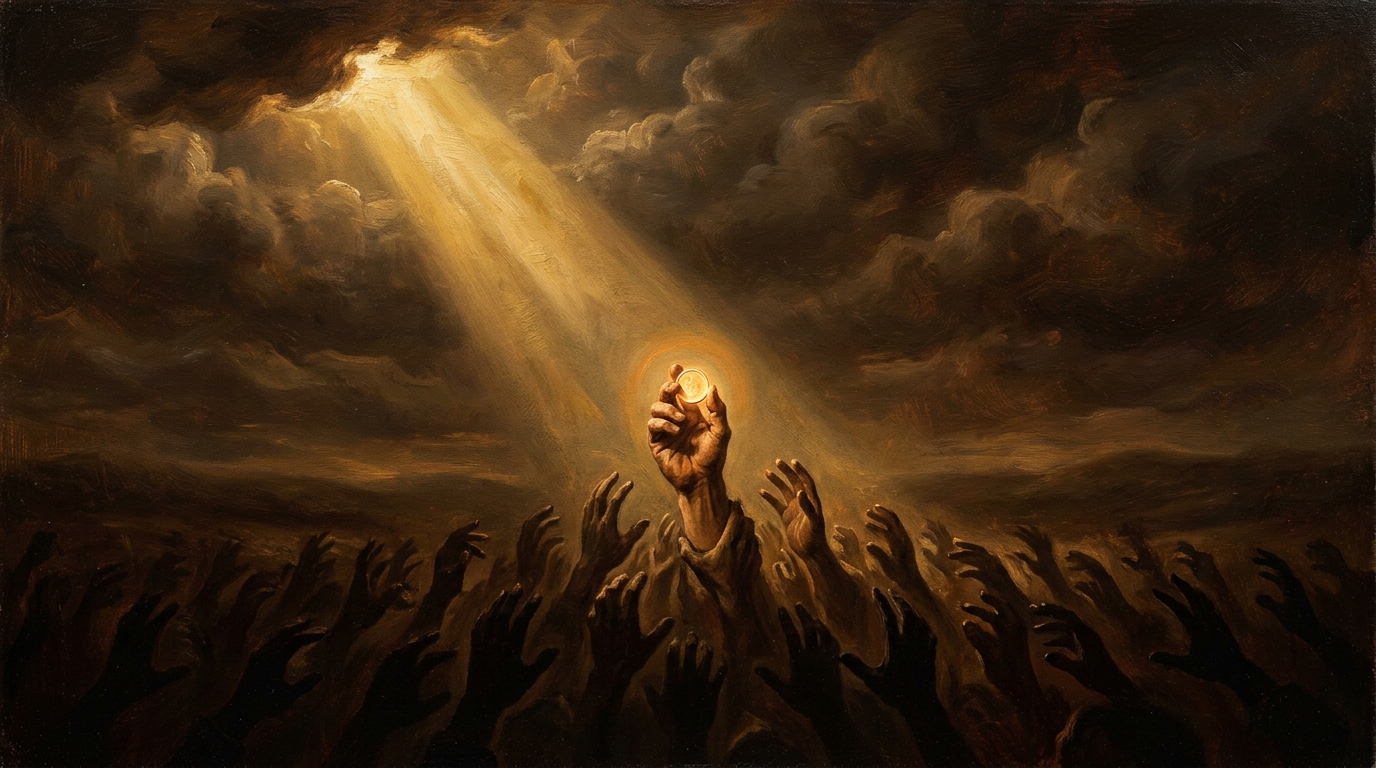
A fan sends $50 to a streamer mid-broadcast. The streamer reads the username aloud, glances at the camera, says "thank you" — and moves on. The whole interaction lasts four seconds.
The fan waits for the next stream to do it again.
This isn't generosity. It's something far more fundamental — and it's reshaping how the sharpest creators think about why fans pay creators at all.
The Real Reason Fans Open Their Wallets
Fans pay creators primarily to be acknowledged, not to fund their work. A 2026 meta-analysis published in BMC Psychology, synthesizing empirical data from 2015 to 2025 across live game streaming platforms, found that virtual gifting is driven by social-affective motivations — the desire to be recognized and responded to by a specific person on the other side of a screen. Generosity is real, but secondary.
A separate 2026 study in the Journal of Management and Information, framed through the Uses and Gratifications lens, put it plainly: fans send paid gifts because they want a reciprocal signal — proof that the creator knows they exist.
Not to be thanked. To be seen.
That distinction carries real weight. The $50 gift isn't primarily a financial contribution to a creator's livelihood — it's a bid for a moment of human exchange with someone the fan admires. According to TikTok monetization data from SQ Magazine, creators who stream live earn an average of $3,200 per month from gifts alone, with top creators drawing up to 72% of their total income from this single mechanism. Viewers are funding that with real, considered money, for real emotional returns.
Recognition is the product. The gift is the delivery mechanism.
The Attention Market: Ancient Need, Broken Infrastructure
Fan recognition has always been a real human need — the tools for meeting it are just badly designed. Before platforms enabled live tipping, fans wrote letters that went unanswered, shouted from concert crowds hoping for eye contact, posted comments into the void. The desire to be seen by a creator — someone whose work moved them, taught them something, or changed their perspective — predates the internet by centuries.
What platforms did was attach a payment rail to that need. What they got wrong, almost universally, was scale without depth.
Live stream chat moves at hundreds of messages per minute. A meaningful financial gift often earns nothing more than a name read in a blur. The fan gets a transaction confirmation, not a genuine moment of exchange. The creator is grateful but distracted. Over time, both parties have been trained to accept this as the ceiling — which is why so many creators plateau at live-stream revenue and struggle to understand why their most engaged fans don't compound in loyalty.
The market for fan recognition is enormous. The tools for delivering it with any real quality barely exist.
Why Does Recognition Feel Worth More Than a Subscription?
Because subscriptions are anonymous by design. You pay $5/month for access to a content library and receive no signal that any individual saw your name. A paid gift in a live stream, by contrast, breaks through noise — for a moment, the creator and fan share the same four seconds of attention. That asymmetric flash of mutual awareness is what fans are actually paying for, and it's why gifting revenue often outperforms subscription revenue per user on the same platform.
The psychology here echoes classic identity-based motivation research: people act in ways that confirm their sense of who they are and who they matter to. A fan who identifies as a valued member of a creator's community will pay to signal that identity — repeatedly, if the signal works.
Three Buyer Types: What Fans Are Actually Purchasing
Understanding why fans pay creators requires separating three distinct purchase motivations. Treating them as one group is the most common and costly mistake in creator monetization strategy.
The Visibility Seeker wants their name said. They're not expecting a conversation — they want to break through the noise. Common in large audiences where individual acknowledgment feels impossible to earn otherwise. The irony is that these fans often have genuinely interesting things to say, but the medium doesn't give them room to say it.
The Connection Seeker doesn't just want acknowledgment — they want to matter, however briefly. They'll pay more, stay longer, and convert more reliably than any other fan segment. They ask thoughtful questions in paid Q&As, write sincere messages alongside donations. Twitch's own creator economy data reflects this: over two-thirds of creator revenue on the platform comes directly from fans through subscriptions and gifts, described internally as "digital patronage with social status baked in." Connection Seekers drive a disproportionate share of that number.
The Status Seeker wants other fans to witness the payment. Twitch's gifted subscriptions are the clearest expression of this dynamic. When a fan gifts 50 subscriptions to a community, they're not just backing the creator — they're establishing their own rank within that community. The payment is a social signal aimed horizontally at peers, not just vertically at the creator.
Most creators build their monetization for Visibility Seekers — the broad, transactional gift economy of live streaming. Connection and Status Seekers, who carry far more spending capacity and far deeper loyalty, are largely underserved by the current toolkit.
Which Fan Type Generates the Most Long-Term Revenue?
Connection Seekers. By a wide margin. They are the fans most likely to stay subscribed for 12+ months, buy merchandise, attend live events, and recommend the creator to friends. Visibility Seekers are high-frequency but shallow — they'll shift platforms the moment a new creator captures their attention. Status Seekers deliver burst revenue but require an active community to perform for. Connection Seekers, given a consistent mechanism for genuine exchange, become the economic backbone of a sustainable creator business.
The Gap Between What Fans Want and What Creators Actually Offer
Most creator monetization infrastructure is built for volume: maximize transaction count, automate the acknowledgment, and scale. This works at the Visibility Seeker level. It structurally fails for Connection Seekers, because genuine exchange doesn't scale the same way a shoutout does.
A creator can read 500 usernames in a two-hour stream. They can have 500 genuine private conversations with approximately zero people.
Consider what this looks like in practice. Take Daniela, a 34-year-old personal finance creator with 28,000 YouTube subscribers. Her top comment each week is some variation of: "I've been following you for two years and your video on emergency funds literally saved my family." She reads it, heart-reacts, and moves on to the next upload. The fan who wrote it has no way to know if she ever saw it — and no mechanism to escalate that message into something real. Daniela, meanwhile, has no way to know that this fan would happily pay $75 for a 10-minute voice message response if the option existed.
According to Fortune Business Insights' creator economy market research, approximately 53% of professional creators now prefer integrated platforms combining monetization, analytics, and audience communication — a clear signal that creators themselves are looking beyond the tips-jar model. The market for high-quality, direct fan interaction is growing precisely because the existing infrastructure for it is so thin.
Money is the most honest signal humans have invented for communicating "this matters to me." Fans already understand that instinctively. The platforms haven't caught up.
The Creators Getting This Right
A growing cohort of creators has landed on a counterintuitive insight: their real product isn't content. It's access. And access, delivered with intention, is worth more per interaction than almost any advertising deal or subscription tier they'll ever negotiate.
The model looks like this. Instead of trying to reach all fans simultaneously (the broadcast model) or promising access through subscriptions that rarely deliver it (the recurring model), these creators build structured moments of private exchange with the fans who value it most.
The math is striking. A creator with 20,000 followers earning $3 CPM from YouTube ads makes roughly $60 per video. That same creator, fielding ten paid direct exchanges per week from fans who genuinely want a response — at prices from $20 to $200 — generates comparable or greater revenue without producing a single additional piece of content.
This isn't theoretical. It's the natural consequence of what the gifting psychology research already shows: fans assign significant monetary value to the moment of genuine acknowledgment. They're already paying for a degraded version of it in live-stream chats. Given the option to pay for a higher-quality version — private, thoughtful, direct — the conversion rates among high-intent fans are predictable and strong.
The creator wins twice: more revenue per fan, and deeper relationships with the people who most influence long-term audience health. Word-of-mouth referrals from Connection Seekers who feel genuinely seen are worth more than almost any paid acquisition strategy.
If you're a creator thinking about building that kind of relationship, it helps to understand what your most devoted fans are actually looking for before designing the offering around them.
Recognition Is a Product. Most Creators Haven't Priced It Yet.
The live-stream gift economy will keep growing. Fans will keep sending $5 and $50 and $500 into chat, hoping for a name read aloud, hoping to feel real for four seconds on someone else's screen.
The creators who build durable, high-revenue businesses in this economy won't do it by optimizing for more gifts per stream. They'll do it by recognizing what those gifts actually represent — an unmet demand for human acknowledgment — and building a way to meet it with real quality.
Private access. Structured exchange. Actual responses to actual people.
Fans have been telling creators what they want for years, with their money. See me. Actually see me. The creators who hear that — and build around it — are the ones who will define the next decade of the attention economy.
Caprice was built around exactly this idea: private, money-backed messages where fans get a real response, and creators get paid fairly for the attention they give. It's the recognition economy, with infrastructure that matches what the research says fans actually want.
Ready to try Caprice?
Send your first sealed offer or start receiving them.