How to Get a Creator to Respond to Your Message
How to Get a Creator to Respond to Your Message
You sent the message three weeks ago. It was thoughtful. Specific. Not a generic "love your work." You explained who you are, what you wanted, why it mattered. You hit send and felt that small, hopeful flutter.
Nothing.
Not a like. Not a "thanks for reaching out." Not even a seen receipt on a platform that shows those. Just silence — from someone who posts multiple times a day and clearly has their phone in their hand constantly.
Here's the brutal truth: it's not personal. But it is, in a very precise way, structural. You played by a system that was never designed to reward genuine outreach. To get a creator to respond, you first need to understand exactly how that system fails you — and then stop using it.
Why Creators Don't Respond (It's Not What You Think)
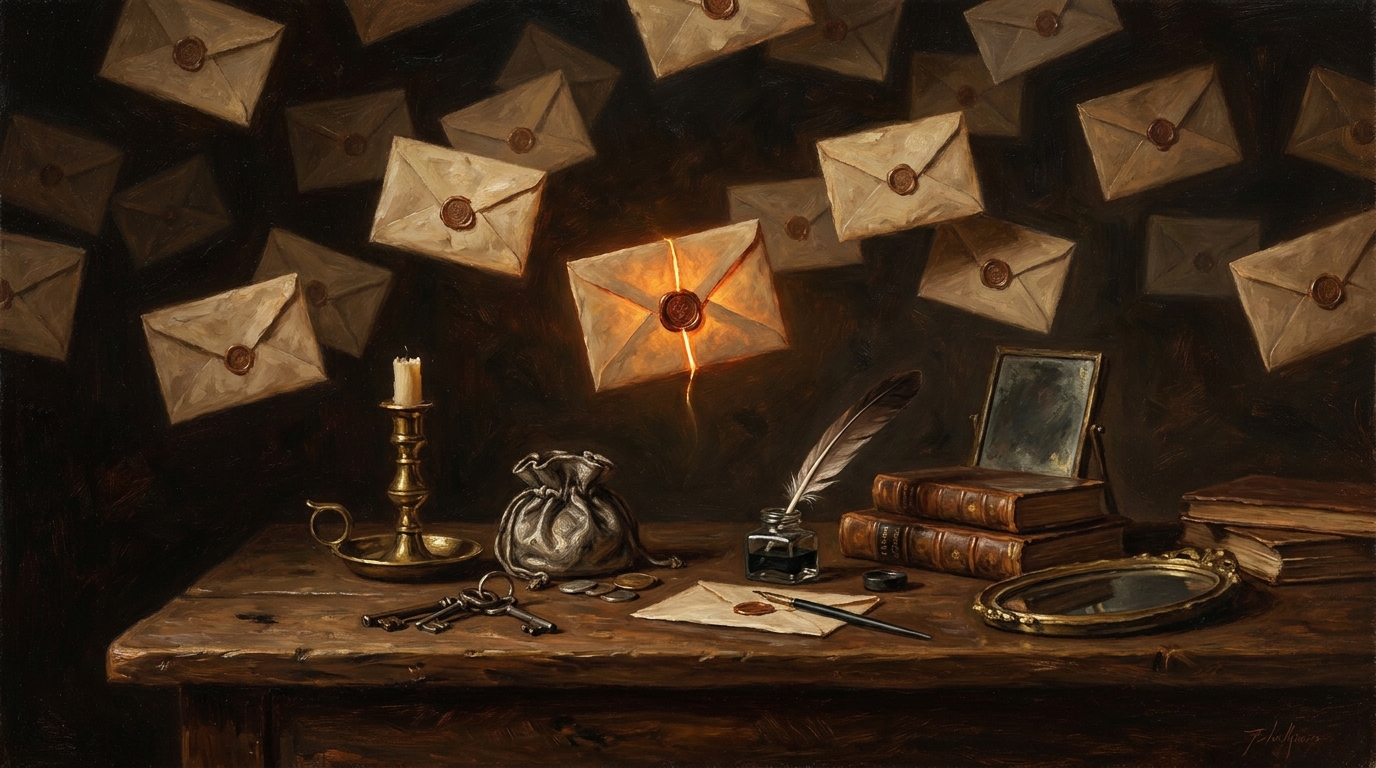
The core problem isn't the quality of your message — it's volume. A creator with 50,000 followers receiving even a 0.1% daily message rate gets 50 DMs every single day. At 500,000 followers, that's 500 messages. There is no triage system, no way to tell from the outside of the envelope which message is which.
Most people assume the barrier to getting a response is relevance. If my message was interesting enough, they'd reply. So they craft longer, more thoughtful messages. They add context. They try to prove they're worth the creator's time.
This is exactly backwards.
Your carefully worded message lands in the same inbox as 499 others — some from close friends, some from brands wiring real money, some from people in genuine crisis. Tools like Instagram's auto-reply features exist precisely because responding to 100+ DMs daily has become a professional burden for mid-size creators, not just mega-influencers. The DM inbox isn't a conversation. It's a landfill.
Data from Deloitte's Digital Media Trends report consistently shows that creator-audience relationships are migrating away from open social platforms toward structured, gated channels — paid newsletters, private communities, membership tiers — because unstructured direct messages have become operationally unmanageable. The creators who do respond reliably are the ones who've built systems to filter signal from noise. Understanding that changes everything about how you approach them.
The Four Types of Outreach — and Why Three Fail
When it comes to getting a creator to respond, the format of your message matters more than its content. There are four distinct approaches most people use — and three of them structurally guarantee silence.
Not all messages are equal, and the differences aren't about quality. They're about what each type asks the recipient to do.
Type 1: The Compliment
"Love your content, it changed how I think about everything."
This is the most common type and the least likely to get a reply. Creators appreciate compliments deeply — but a compliment requires no action. There is nothing to respond to. The creator reads it, feels a flicker of warmth, and scrolls on.
Type 2: The Ask
"Can you check out my project / collab / podcast question?"
Worse odds than the compliment. Now you're requesting real time with no reason given to prioritize you over the 200 other asks sitting in the same inbox. The implicit math the creator runs — consciously or not — is: why should a stranger get 20 minutes of my attention for free?
Type 3: The Long Explanation
"I know you're busy, so I'll keep this short — [proceeds to write 400 words]."
The longer the message, the lower the response rate. A wall of text in an already overwhelming inbox is friction compounding friction. Creators aren't avoiding short messages. They're drowning in long ones. The extra context you added to seem credible is the exact reason you got ignored.
Type 4: The Signal
This is the one that works.
A signal is anything that communicates — before a single word is read — that this message is different. That responding is worth the time. That you have real skin in the game. The most credible signal has always been money. Not because creators are mercenary. Because money is the one thing that cuts through ambiguity and answers the question is this person serious? before the conversation even begins.
What "Skin in the Game" Actually Means for Outreach
Attaching a financial stake to a message works not as a bribe, but as a credibility signal — one that communicates commitment before a single word is read. When a message costs nothing to send and nothing if ignored, it carries no information. When it costs you something real, it carries everything.
The concept comes from Nassim Nicholas Taleb's 2018 book Skin in the Game: we only trust people whose claims carry real personal cost if they're wrong. A doctor who takes the same medication they prescribe is more credible than one who doesn't. The same logic governs outreach.
Consider two messages side by side. The first: a carefully written DM from someone named Marcus who spent 45 minutes on it, explaining his podcast, why this creator is the perfect guest, and what the audience looks like. The second: a two-sentence request with $60 attached. Marcus's message is objectively better-written. But the second one is more likely to get opened — because it answers a question Marcus's message can't: how much does this person actually want this?
The money in that scenario isn't a transaction. It's information. It tells the creator: this person considered what the conversation is worth to them and put that number down on the table. That's more signal than any cover letter delivers.
Critically, on platforms designed around this model, the creator doesn't keep the money if they decline. The incentive is symmetric. It's not pay-to-talk — it's demonstrate-your-seriousness, and let the creator decide whether to engage.
A Practical Framework for Getting a Response
The five-part framework below applies to any channel — structured platforms, email, or social DMs. Each step is designed to reduce the perceived cost of responding while increasing the signal that your message is worth the creator's attention.
Theory lands differently when it's concrete, so here's what this looks like in practice. Imagine Priya — a UX researcher who's followed a design creator for three years and wants 15 minutes to ask about their career pivot. She's tried two DMs. Both ignored. Here's what she does differently the third time:
1. Lead with the ask in one sentence — before anything else.
Not context, not backstory. The ask. "I'd love 15 minutes to ask about your decision to go independent after agency life." One sentence. The creator knows what you want before the second sentence loads. This alone doubles the read-through rate, because the creator can make a snap decision rather than committing to parsing a wall of text to find out what you want.
2. Make responding require under 60 seconds.
Yes/no questions get answered. Open-ended brain-pickers don't. "Would a quick voice note work, or do you prefer written?" is a question that takes 10 seconds to answer. "Can I pick your brain about everything you know about going independent?" is a project. Lower the friction dramatically, and the math changes.
3. Give a reason that lives in their world, not yours.
"This would mean a lot to me" is a reason that exists entirely in your emotional reality. Creators are sympathetic — but they hear this 200 times a day. Find the reason that operates in their world. Do they love talking about this topic? Is your use case unusual enough to be genuinely interesting? Does your platform reach an audience they'd want to connect with? Locate that angle. Lead with it.
4. Attach a real stake to the message.
On platforms where this is possible — and they do exist — put money behind your request. Even a modest amount changes the dynamics completely. It filters ambiguity, communicates seriousness, and gives the creator a clear metric for prioritizing their limited response time. Priya attaches $50. She gets a response within four hours from someone who'd ignored two previous DMs.
5. Keep the whole thing short enough to answer while waiting for coffee.
If your message would take longer than 90 seconds to respond to, cut it in half. The goal isn't to impress with the depth of your message — it's to make saying yes feel effortless.
Does This Work If You're Not a Brand or Business?
Yes — and it works especially well for individuals. Brands contacting creators have entire playbooks: cold email scripts, PR software, dedicated budgets. An individual reaching out as a genuine fan or fellow thinker has a different kind of credibility, but they have to make it legible. A financial stake attached to a personal, thoughtful message is rare. That's exactly why it cuts through.
The people who get the most access to busy creators aren't the ones sending the cleverest cold DMs. According to analysis of creator platform interactions, the top fraction of engaged users — those who demonstrate commitment through paid access or structured outreach — generate a disproportionate share of creator-revenue and, more importantly, creator attention. Commitment, not cleverness, is the differentiator.
The Mindset Shift That Changes Everything
There's an assumption baked into most outreach: that getting a response is about being impressive enough. That if you can demonstrate sufficient value, insight, or relevance, the creator will recognize you and reply.
This assumption flatters us. It frames the outcome as a reflection of our worth.
The reality is more mechanical — and, strangely, more fair. Response rates have almost nothing to do with the quality of the sender and almost everything to do with the systems the recipient uses to manage attention. A creator with rigorous inbox hygiene responds to more messages than one who doesn't, regardless of how good the messages are. You cannot write your way past a broken system. You can only change what the outside of your envelope looks like.
Shorter ask. Clearer value to them. Real stake attached. Those three things don't just increase your odds — they reframe the entire interaction. You stop being a supplicant hoping to be noticed and start being someone who made a considered decision about what a conversation is worth. That's a fundamentally different posture. Creators feel the difference immediately.
Getting Started
If you've spent years following someone whose work shaped how you think — a creator, researcher, expert, or coach — and you want a real conversation, not a form-letter auto-reply, Caprice was designed for exactly this. You set what the conversation is worth to you. The creator decides if it's worth their time. No spam filters working against you, no inbox lottery, no silence.
Want to understand how creators think about managing their attention and why most platforms fail them? The Caprice manifesto lays out the structural case in full.
Your message gets seen. That's the only promise that matters.
Ready to try Caprice?
Send your first sealed offer or start receiving them.