The Broken Inbox: Why Free DMs Fail Everyone
The Broken Inbox: Why Free DMs Fail Everyone
You sent a message to a creator you genuinely admire. Something real — a question you'd been sitting with for weeks, a collaboration idea that took courage to type out, maybe just a note telling them their work changed something for you. You hit send.
That was four months ago.
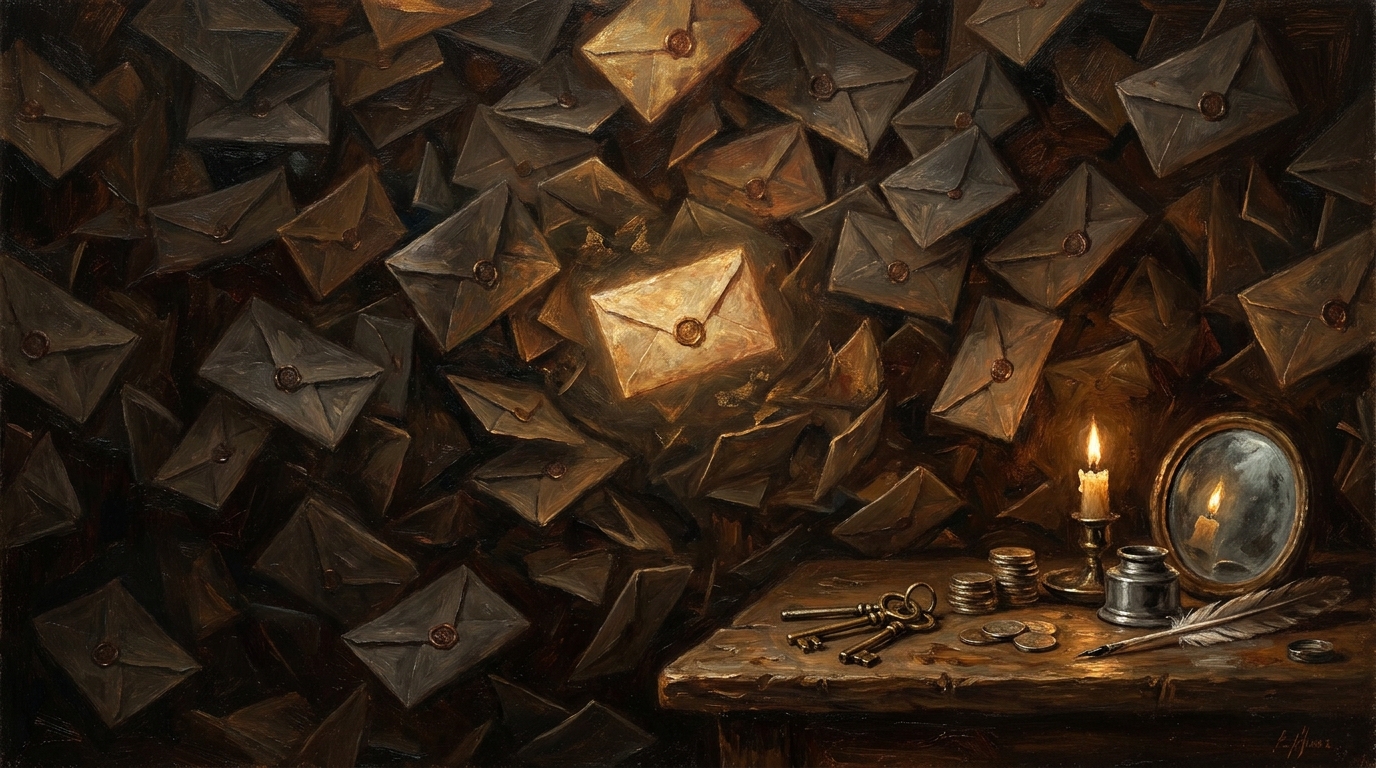
The silence wasn't personal. But it was a failure — of a system almost nobody names directly. The creator inbox problem is structural, not behavioral. Understanding why it breaks reveals exactly what a fix would have to do.
The Free Inbox Was Never Built to Scale
The creator inbox problem begins with a design decision that looked generous in 2010 and looks catastrophic in 2025: anyone can message anyone, at zero cost, with no friction whatsoever.
When the cost of sending a message is zero, the cost of ignoring a message is also zero. And when ignoring is free, noise floods in until signal becomes impossible to find. Economists call this adverse selection — the same dynamic George Akerlof identified in used-car markets, where low-quality inputs crowd out high-quality ones because there's no mechanism to distinguish between them. The open inbox is the lemons market of the attention economy.
The result, at scale, is inbox collapse.
A creator with 50,000 followers typically receives 400–800 DMs after a single viral post. Not 400 that matter — 400 total, of which roughly a dozen are worth reading, and of those, maybe three require a real response. But there's no way to identify which three without reading all 400. Reading all 400 is a part-time job that generates zero income and zero creative output. So creators do what any rational person does when a problem is structurally unsolvable: they abandon the channel entirely.
Why does the open inbox fail at scale?
The open inbox fails because it has no price mechanism. Price signals — even small ones — do two things simultaneously: they filter out low-intent senders and they communicate genuine interest to receivers. Without any cost attached to sending, inboxes are flooded with messages that cost nothing to ignore, because they cost nothing to send. The result is a channel that looks active on the surface and is functionally dead underneath.
What the Data Reveals About Creator Messaging
Research from ManyChat shows that Instagram DM open rates exceed 80% — which sounds like strong engagement until you parse what "open" actually means. A creator opening their DM folder is not the same as a creator reading, evaluating, and responding to individual messages. The first is a habit. The second is labor.
Meanwhile, DM automation has become the default response to inbox overload. A 2026 survey of creator tools found that automated replies — bots handling the first response, canned answers to common questions, AI-generated acknowledgments — are now standard practice for mid-to-large creators. The inbox is technically open. Nobody with a human brain is home.
On the fan side, the numbers tell an equally stark story. Private messages account for nearly 70% of all transactions on high-engagement creator platforms, according to data from OnlyFans' public reporting (377.5 million registered fan accounts, $7.2 billion in gross payments in fiscal 2024). The one-on-one message isn't a niche preference — it's how the majority of fans want to connect with the people they follow.
Two forces are in direct, structural collision: fans with intense, genuine demand for personal creator contact, and creators who've been systematically forced to automate, ignore, or deprioritize every message that arrives. The channel fans value most is the channel creators have most effectively abandoned. That's not a content strategy problem. It's a market design problem.
Is DM automation actually solving the problem for creators?
No. Automation addresses the symptom (inbox volume) without touching the cause (zero-cost entry). When a fan receives an automated reply to a heartfelt message, the relationship signal they were trying to send goes unread — and frequently, unrecognized. Automation doesn't clear the inbox; it creates the appearance of a cleared inbox while the underlying signal-to-noise failure remains intact.
The Hidden Cost to Creators Is Larger Than It Looks
Most discussions about the broken inbox center on the fan's frustration — the unanswered message, the feeling of invisibility. The creator's loss gets less attention, and it runs deeper.
Every unanswered message is an unread signal. Noise, yes — but also:
- A brand contact pitching a deal that never materializes because the creator never saw it
- A superfan prepared to pay meaningfully for access or a custom interaction
- A collaborator whose project would have been career-defining
- Someone whose genuine connection would have renewed the creator's sense of purpose on a rough week
The problem isn't that creators are careless or dismissive. The problem is that a zero-price inbox produces zero information. When everything costs the same to send — nothing — everything appears equally worthless to receive. A heartfelt note from a three-year subscriber sits adjacent to a promotional pitch from a stranger and a message from a bot. The inbox has no native mechanism to say: this one is different.
Creators respond to this by applying rough cognitive filters: verified accounts get priority, recognizable names get priority, accounts with large follower counts get priority. The people most likely to receive a response are therefore other large creators and established brands — precisely the people who need the access least. The longtime fan who bought the merch, showed up to every livestream, and wrote a sincere message — their DM dies in the pile.
This matters for the creator's business too. Research from Uscreen's creator economy report consistently shows that superfans — the top 5–10% of an audience by engagement — generate a disproportionate share of creator revenue. An inbox that structurally buries their messages isn't just a UX failure. It's a revenue leak.
Why Platform "Solutions" Have Made Things Worse
Platforms know the inbox is broken. Their interventions have, almost uniformly, made it worse.
Message filtering tools let creators sort by follower count or verification status, which advantages established accounts over genuine fans. Request folders push unknown senders into a secondary inbox that gets checked even less than the primary. Paid messaging tiers on some platforms theoretically let creators charge for access — but the implementation is clunky, discovery is poor, and the friction is high enough that most fans never attempt it.
The structural explanation for why platforms don't fix this properly is worth stating plainly: platforms profit from volume, not quality. Engagement metrics — what advertisers pay for — rise when inboxes are chaotic. More messages sent looks like more activity. More activity justifies higher ad rates. The fact that most of those messages vanish into silence is irrelevant to a quarterly earnings call. The incentive to build a messaging system that actually works — where signal reliably reaches creators, and genuine senders get real answers — doesn't exist at the platform level. Quality is, by design, your problem.
What would a messaging system that actually works look like?
A functional creator inbox requires three things working in parallel. First, a credible signal filter: a mechanism that lets senders communicate genuine intent in a way that's costly to fake. Second, creator sovereignty: the ability to accept, decline, or counter without obligation or social penalty. Third, mutual accountability: protection for both parties — senders don't lose money on messages ignored indefinitely; creators aren't manipulated by vague or bad-faith requests. Free, open DMs satisfy none of these criteria.
The Inbox as a Broken Market — and How Markets Get Fixed
Reframing the creator inbox as a market clarifies why every platform-native solution has missed the point. Every market with a broken price mechanism produces the same outcome: oversupply of low-quality inputs, undersupply of genuine high-quality engagement, and eventual participant withdrawal. The open DM inbox is a textbook case.
The fix isn't more sorting features. It's a price signal — specifically, the kind that economist Michael Spence called a "credible signal": one that is costly enough to send that only people with genuine intent will send it.
When a sender attaches real money to a message — not as a tip after the fact, but as a condition of transmission — the entire dynamic shifts. Senders self-select: only people with real intent will pay to reach out. Creators receive the information they need: this person has skin in the game. The noise evaporates because noise isn't worth paying for. Even a modest monetary signal cuts through what volume alone never could.
This is the architecture that Caprice is built around. A "caprice" is a sealed offer: a private, encrypted message with money attached, sent to a creator who then decides to accept, decline, or counter. The sender is only charged if the creator accepts. If the creator doesn't respond within 48 hours, the funds are automatically returned — no pressure, no obligation, no inbox collapse. For creators who want to set their own terms before they ever see a request, the creator setup flow takes about three minutes.
It isn't a tip jar. It isn't a subscription. It's what a functioning creator inbox actually looks like — one where every message that arrives is worth evaluating, and every serious sender gets a genuine answer.
The Gap Is Only Going to Widen
Creator audiences are growing. The volume of incoming messages is growing faster. Automation tools are getting better at simulating responses. And the gap between what fans expect from a direct message and what they actually encounter will quietly, steadily widen.
The creators who solve this early — who build a structured, intentional way for their audience to reach them — won't just earn more from direct interactions. They'll preserve something genuinely rare: a clear line to the people who matter most to their work, kept clean of the noise that makes it impossible to hear them.
The broken inbox is a design failure, not a people failure. The fix is structural, it's rooted in a century of economics research on signaling and market design, and it already exists. The question is which creators will use it before inbox collapse becomes their default working condition.
Ready to try Caprice?
Send your first sealed offer or start receiving them.