AI Chatbot Paradox: Why Real Creator Attention Pays More
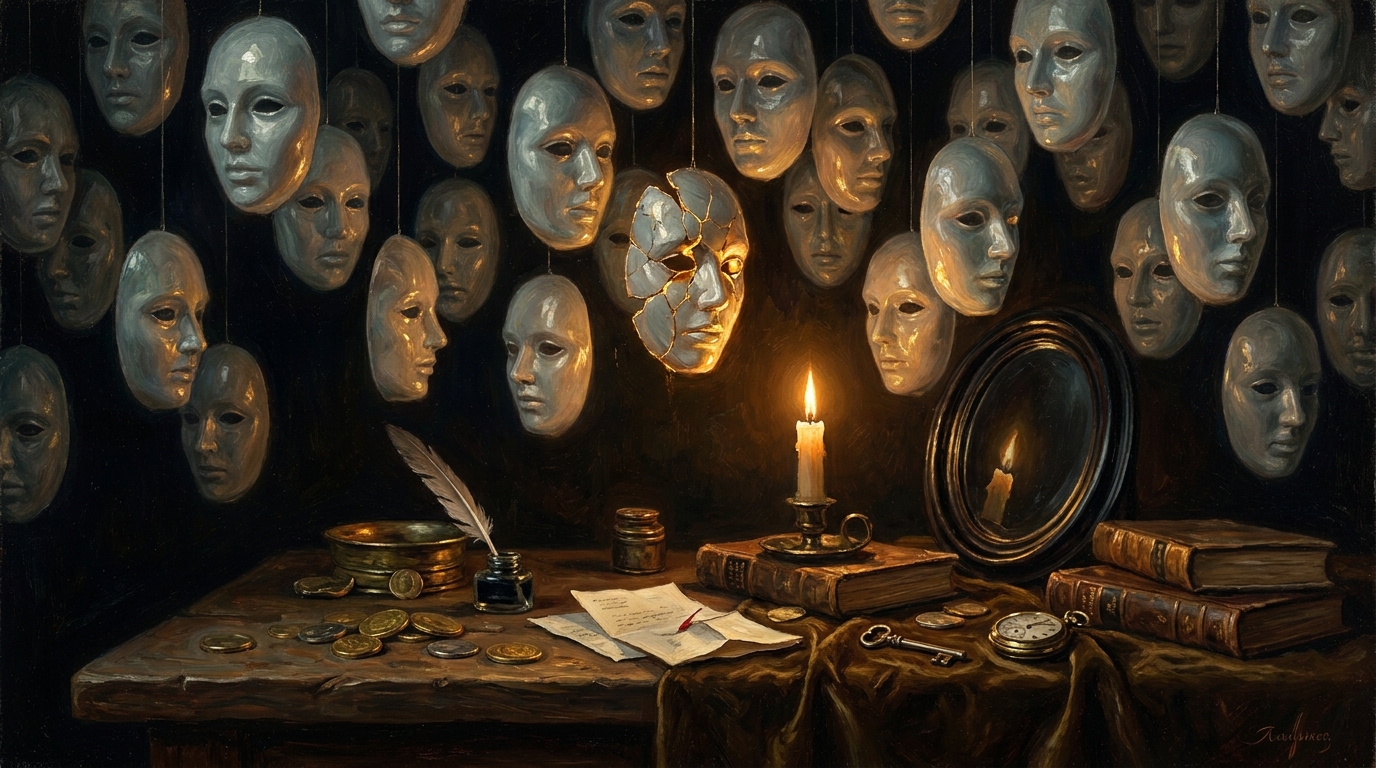
AI Chatbot Paradox: Why Real Creator Attention Pays More
Somewhere right now, a fan is having an emotional conversation with their favorite creator. Sharing something personal. Feeling genuinely heard. Getting a reply that seems warm, specific, and real.
The creator never read a single word of it.
An AI did — trained on the creator's old messages, approximating their cadence, outputting empathy on a schedule. This is the quiet architecture spreading through the creator economy in 2026, and most fans have no idea it's happening. Platforms are shipping AI-assisted messaging tools that let creators "respond" to thousands of fans simultaneously. The creator's name is on the reply. The creator's voice is approximated. The human is absent.
Here's the paradox: this might be the best thing that ever happened to AI chatbot-aware creators who choose to stay present.
The AI Flood Is Real, and It's Accelerating
AI-assisted creator messaging is no longer a fringe experiment — it's an active commercial market. Forbes reported in April 2026 that companies are building "creator AI" tools to automate fan messaging at scale, products already used by celebrities with millions of followers. Fanvue's AI Monetisation Report 2026 confirms the pattern: AI-assisted messaging is marketed as the fix for creator bandwidth problems, promising that fans can be made to "feel valued and acknowledged" by a bot trained on the creator's past output. One platform scaled to 325,000 creators in two years on this pitch.
The clinical picture is more troubling. Stanford researchers published findings in April 2026 documenting how AI chatbot relationships can trigger "delusional spirals" — feedback loops where users form deep emotional attachments to systems specifically engineered to keep them engaged. The concern isn't hypothetical. It's showing up in therapy sessions.
Scale is the variable that makes this structural rather than anecdotal. When AI can simulate thousands of simultaneous "personal" conversations, it doesn't just change how one creator operates — it changes what "a message from a creator" means for everyone on the platform. The category shifts.
Does AI messaging actually fool fans?
Yes, with meaningful frequency. Wired documented cases in 2025 of fans who had spent hundreds of dollars on what they believed were personal exchanges, only to discover months later they'd been talking to a bot. The backlash wasn't mild disappointment — it was the specific, combustible fury of someone who realized the intimacy was manufactured. The emotional investment was real. The other party wasn't.
What Fans Actually Pay For (And What They're About to Lose)
Fans don't pay for content. They pay for connection — and the data on this is consistent across every major creator economy research effort. This distinction is the entire premise of the authenticity premium that is now under threat from AI chatbot saturation.
Patreon's 2025 State of Create report found creators increasingly measure success through direct audience relationships rather than follower counts. Authenticity and relatability, across analyst reporting from Vogue to inBeat's 75 Creator Economy Statistics 2026, "often trump high production values, especially when fans are paying for exclusive access." That's purchasing behavior, not sentiment data.
"In 2026, authenticity isn't a soft skill or a marketing message. It's an economic strategy that commands premium pricing in markets where everything else has become commoditized." — Responsive Technology Partners, April 2026
Take Priya, a wellness creator with 18,000 subscribers on a membership platform. Her engagement rate sits at 11% — triple the platform average. The reason isn't production quality; her setup is a ring light and a decent camera. Fans pay her $15/month because she replies to comments herself, references previous conversations, and occasionally admits she got something wrong. When a rival in her niche started using AI-assisted DMs, Priya's retention climbed. Fans who'd been burned elsewhere came looking for the real thing and paid accordingly.
The handmade goods analogy is instructive here. Mass manufacturing didn't destroy artisan markets — it created a premium tier for them. A handmade ceramic mug costs ten times a factory-produced one, not because it functions better, but because the human touch became the product itself. The same bifurcation is forming around human creator attention right now, and it's happening faster than most creators have noticed.
The Counterargument Worth Taking Seriously
The bullish case for AI fan engagement is coherent: creators with 2 million followers cannot maintain 2 million genuine relationships. An AI that sends a thoughtful, personalized reply is better than silence. Subscriptions stay active. Revenue holds. The creator gets to focus on output rather than inbox management.
This argument has genuine merit for certain use cases. Some automation is inevitable, and some of it genuinely serves fans who would otherwise hear nothing at all.
The argument collapses the moment fans know. And increasingly, they find out.
CommuniPass noted in their 2026 creator monetization report that "erosion of trust and authenticity can impact brand willingness to invest in creators, especially those perceived as using AI extensively." That's advertising budgets evaporating. Brand pullback typically precedes fan pullback by one news cycle. The creators who automate everything may hold revenue in the short term; the ones who don't — who make real contact a structural feature, not a side effect — are building something no algorithm replicates. They're building proof.
Should creators use AI for fan messaging at all?
The honest answer is: it depends on the disclosure. AI-assisted replies that fans know are AI-assisted preserve trust. Undisclosed AI impersonation — presenting bot outputs as personal creator messages — is the practice corroding the category. The distinction matters both ethically and commercially. Creators who blur this line are borrowing against a trust balance they can't refill once it's spent.
The New Signal: Verified Human Contact
A new scarcity is forming in the creator economy, and the market hasn't priced it correctly yet. Attention was already scarce. Now human attention is scarce — and the two things are currently valued the same, which they shouldn't be.
A creator who responds personally, whose words are genuinely theirs, who read a specific message and chose to reply — that's a fundamentally different product than an AI approximation. The difference just hasn't been legible to fans until recently. As MindStudio's analysis of the human-made premium puts it: "Human perspective and verified authenticity are the emerging premium" precisely because content itself has become abundant.
Fans who've been burned by the AI version are becoming acutely sensitive to signals of real engagement. A reply that references something specific and contextually improbable. A message that arrives at an odd hour with an actual typo. A response that pushes back rather than affirming everything. These are the cues that now bypass growing suspicion and register as proof of humanity.
The creators responding to this shift aren't claiming "I respond to every message" — no one believes that anymore. The credible repositioning is different: when I respond, it's me. And there's a structure that guarantees it.
That structure is what platforms like Caprice are built around. The model isn't mass messaging — it's a private, encrypted request with real stakes attached, where the creator makes a deliberate decision to accept or decline. The human is present in every transaction by design. There's no AI layer possible in the middle, because the value proposition is the human choice itself.
What This Means for Creators Right Now
The strategic window here is specific and won't stay open forever. Three things creators can act on immediately:
Differentiate on provenance. The creator economy is segmenting hard between "AI-assisted" and "human-verified." Creators who can credibly claim the latter — and offer proof through the structure of their interaction model — will command a premium that is still forming. Getting in front of that segmentation now costs almost nothing. Waiting until the market names it costs a lot.
Charge for scarcity honestly. If a response is actually from you — your attention, your words, your considered reply — that's worth more than a monthly content subscription. Most creators underprice genuine interaction by an order of magnitude. A direct response from a creator with 50,000 followers is rare by definition. Pricing should reflect that rarity, not apologize for it.
Let the mechanism do the signaling. Saying "I'm real, not a bot" in a bio is not differentiation — every bot-assisted creator can make the same claim. Proof lives in the mechanism. Platforms where genuine engagement is structurally guaranteed — where a creator's response is a deliberate, compensated, human act — make the authenticity argument credibly. The architecture is the argument.
This is the insight that gets missed in most creator monetization conversations: authenticity isn't a marketing position. It's a product architecture decision.
The Creators Who Win the Next Decade
The irony of the AI wave is that it didn't devalue human creators. It clarified a question everyone had been too polite to ask: is there actually a real person on the other side?
For most creator-fan relationships, the honest answer is becoming "sort of." An AI trained on the creator's voice. A team ghostwriting captions. A moderation layer filtering what the creator ever sees. These aren't scandals — they're scale solutions. But they do mean genuine human contact is no longer a default feature of following someone online.
The creators who recognize this shift early aren't fighting the AI tide. They're reading it as a market signal. When everything automates, the deliberate choice to be present — to read a message, consider a reply, decide — becomes the highest-signal form of creator identity available.
Not all attention is equal. A significant portion of what fans are buying right now isn't attention at all. It's a simulation of attention, priced as if it were real.
The real thing is becoming rare. Rare things, when someone builds a credible way to access them, get priced accordingly — and that pricing gap is only going to widen.
For creators who are genuinely present with their audience and want a way to make that presence both sustainable and provable, Caprice was built for exactly this moment.
Ready to try Caprice?
Send your first sealed offer or start receiving them.